PRESS RELEASE: AppalReD Legal Aid Wins Appeal Protecting Coal Miners’ Access to Medical Care
Prestonsburg, KY — AppalReD Legal Aid has won an important appeal that strengthens access to legal representation for coal miners disabled by black lung disease. In Sparks v. Locust Grove, the U.S. Department of Labor’s Benefits Review Board ruled that when a coal company challenges a miner’s medical treatment, it must also pay the attorneys’ fees and costs required to defend that care.
The decision addresses a long-standing problem in black lung cases: miners have often been forced into adversarial hearings over medical treatment even after winning their benefits claims, while attorneys who successfully defended that care were denied payment for their work. Without fee awards, many lawyers cannot afford to take these technical and time-intensive cases.
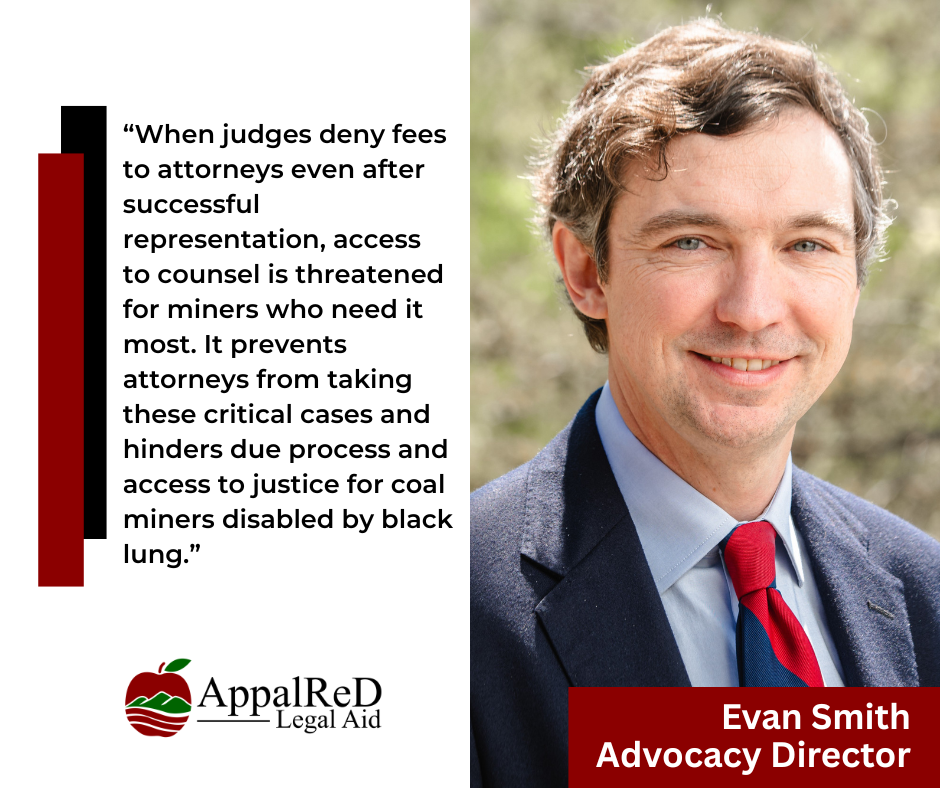
“Very simply this is a matter of denying due process and access to justice for coal miners disabled by black lung,” says Evan Smith, Advocacy Director at AppalReD Legal Aid.
The case arose from the claims of two Kentucky miners, Ricky Sparks and Donald Marcum. While their federal black lung claims were pending, the Department of Labor paid interim medical benefits through the Black Lung Disability Trust Fund. After the miners’ awards became final, the Department sought reimbursement from the coal companies, which refused, creating the risk of significant overpayment claims against the miners. Both coal miners were represented by a sole practitioner in Martin County, Leonard Stayton, who helped develop medical evidence to explain the miners’ medical care. Stayton won the case for his claimants, but the judge determined that he could not be paid for his significant work or out-of-pocket expenses.
AppalReD Legal Aid filed a consolidated appeal to address the broader systemic issue. Black lung billing and treatment disputes are highly complex, and federal law prevents attorneys from charging miners directly. When judges deny fees even after successful representation, access to counsel is undermined for miners who need it most.
The importance of this victory for coal miners and their families is reinforced by a report from the U.S. Government Accountability Office, released just this week. It found that many miners recognize that federal black lung medical benefits are more valuable than the monthly benefits that the program provides. However, miners are afraid to “use their interim medical benefits because they may be responsible for paying them back” (p 24). The report also found that miners in focus groups described positive experiences with legal representation but that most claimants do not have an attorney, underscoring the importance of access to counsel in cases like Sparks.
This decision is a meaningful step toward both access to justice and health justice for coal miners who depend on black lung benefits for medical care.